
Oil plays a major role in keeping an engine running smoothly. It helps reduce friction, carries heat away from moving parts, and prevents harmful buildup inside the engine.
Over time, though, engine oil breaks down.
It becomes dirty, loses effectiveness, and may no longer protect the engine as well as it should. That is why regular oil changes matter. Waiting too long can lead to poor performance, higher fuel use, and expensive repairs.
Knowing the warning signs can help drivers act before a small maintenance issue becomes a larger problem.
The Oil Change Light Is On
One of the clearest signs is the oil change reminder on the dashboard.
Many newer vehicles track mileage, driving conditions, and engine use. When the system decides the oil is close to the end of its service life, a maintenance light may appear.
Do not confuse this with the oil pressure warning light.
An oil change reminder usually means routine service is due soon. An oil pressure warning light may point to low oil pressure or another serious problem. If the oil pressure light comes on while driving, stop safely and check the vehicle as soon as possible.
The Oil Looks Dark and Dirty
Fresh engine oil usually looks clear and amber in color.
As it moves through the engine, it collects dirt, carbon, and other contaminants. It naturally becomes darker over time. Dark oil alone does not always mean it needs immediate replacement, but thick, gritty, or sludgy oil can be a warning sign.
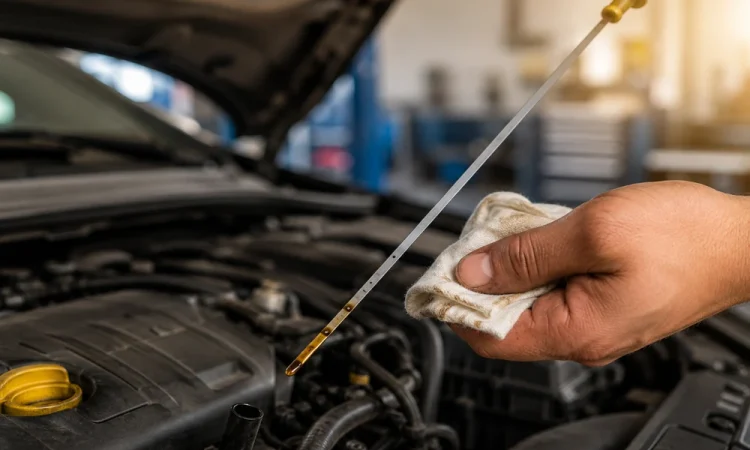
Check the oil with the dipstick when the vehicle is parked on level ground and the engine has cooled.
Look at the color, level, and texture. If the oil feels unusually thick or contains visible particles, an oil change may be overdue.
The Engine Sounds Louder Than Normal
Engine oil creates a protective layer between moving metal parts.
When the oil becomes old or too low, the engine may sound louder. Drivers may notice ticking, tapping, knocking, or rough mechanical noises.
These sounds should not be ignored.
A light ticking sound may happen when oil is not flowing properly through the engine. A louder knocking noise can point to more serious internal wear.
Changing the oil may help when the issue is related to old or low oil, but unusual engine noises should still be inspected.
The Vehicle Feels Sluggish
Old oil can make the engine work harder than necessary.
You may notice slower acceleration, rough idling, or a general drop in performance. The vehicle may still run, but it may not feel as smooth or responsive as it normally does.
This happens because dirty oil does not move through the engine as easily. Increased friction can make the engine less efficient.
A fresh oil change may improve performance, especially when routine service has been delayed.
Fuel Economy Has Dropped
Poor fuel economy can have many causes, including low tire pressure, dirty filters, and driving habits.
Old engine oil may also play a part.
When the oil loses its ability to reduce friction, the engine has to use more energy to operate. That extra effort can increase fuel consumption.
If you are visiting the gas station more often and cannot find another clear reason, check when the last oil change was completed.
You Smell Burning Oil
A burning smell inside or around the vehicle may mean oil is leaking onto a hot engine component.
It may also happen when the oil level is too low and the engine is running hotter than normal.
Look for oil spots beneath the vehicle and check the dipstick. Leaks may come from seals, gaskets, the oil filter, or the drain plug.
Adding oil may temporarily restore the level, but it does not repair the source of the leak.
Exhaust Smoke Looks Unusual
Normal exhaust may produce a small amount of light vapor, especially during cold starts.
Blue or gray smoke is different. It can mean that oil is entering the combustion chamber and burning with the fuel.
This may happen because of worn engine components, damaged seals, or another internal problem. An oil change alone may not solve it, but overdue maintenance can make engine wear worse.
Unusual exhaust smoke should be checked promptly.
You Cannot Remember the Last Oil Change
Sometimes the clearest sign is simply losing track of the schedule.
Check the service sticker, maintenance records, or vehicle app. If you cannot remember when the oil was last changed, inspect the level and condition and review the owner’s manual.
Oil change intervals vary by vehicle, oil type, mileage, and driving conditions. Frequent short trips, heavy traffic, towing, high temperatures, and dusty roads may require more frequent service.
Do Not Wait for Engine Trouble
An overdue oil change may not cause an immediate breakdown. That is why it is easy to delay.
Still, old oil slowly loses its ability to protect the engine. Paying attention to dashboard reminders, unusual noises, dirty oil, reduced performance, and burning smells can help prevent unnecessary damage.
Regular oil changes remain one of the simplest ways to support engine life, fuel efficiency, and dependable vehicle performance.
This post was written by a professional at Tires2Go Florida. Tires2Go Florida is a trusted automotive service center located in Pinellas Park, Florida, serving drivers across St. Petersburg, Tampa, Clearwater, and Largo. Our certified mechanics handle tire and wheel replacement, brake service, suspension repairs, oil change Clearwater, wheel alignments, tire balancing, and road force balancing. We also specialize in ADAS calibration, suspension modifications, lift kits, and lowering kits using quality parts and modern diagnostic equipment. From routine maintenance to advanced automotive services, Tires2Go Florida provides dependable solutions and tires for sale for vehicles throughout the Tampa Bay area.