
The Evolution of Professional Automotive Paint Supplies
Achieving a flawless automotive finish is both an art and a precise science, where every detail significantly contributes to a vehicle’s aesthetic and value. A critical component of this process is colour matching, ensuring that new paint seamlessly blends with existing surfaces. An imperfect colour match on a repair or restoration can noticeably diminish a vehicle’s appearance and overall value.
This comprehensive guide aims to demystify the intricacies of colour matching in the automotive industry. We will explore the various methods, cutting-edge technologies, and practical considerations involved in achieving perfect results. To truly master this critical aspect of refinishing, including the complexities of advanced automotive colour matching, understanding these core principles is essential.
The journey of automotive paint has been one of continuous innovation, transforming from basic protective coatings to sophisticated multi-layered systems that define a vehicle’s aesthetic appeal and durability. Historically, car paints were simple lacquers or enamels, offering limited colour options and prone to fading and chipping. However, with advancements in chemical engineering and manufacturing processes, the industry has witnessed a remarkable evolution.
Today, professional automotive paint supplies encompass a vast array of products designed for specific purposes, from primers that ensure adhesion and corrosion resistance, to basecoats that deliver vibrant colour, and clear coats that provide a glossy, protective finish. This evolution is driven by the demand for greater durability, enhanced aesthetics, and improved environmental compliance. Modern paint systems are engineered to withstand harsh weather conditions, UV radiation, and daily wear and tear, all while maintaining a pristine appearance for years.
A significant development in recent decades has been the rise of alternative coating technologies, such as powder coating. This method involves applying a dry powder that is then heated to form a hard finish, offering exceptional durability and a wide range of aesthetic options. For those looking to explore the benefits and applications of this robust finish, our comprehensive guide on The Ultimate Guide to Powder Coat Colour Options provides in-depth insights into this evolving technology. The continuous pursuit of perfection in automotive finishes means that professional paint suppliers are constantly adapting, integrating new materials and techniques to meet the exacting standards of the industry.
Essential Automotive Paint Supplies for Surface Preparation
The foundation of any exceptional automotive paint job lies in meticulous surface preparation. Without proper preparation, even the highest quality paint will fail to adhere correctly, leading to premature peeling, cracking, or an uneven finish. This crucial stage involves several steps, each requiring specific supplies and techniques.
Firstly, addressing any existing imperfections is paramount. This includes identifying and treating rust, which can quickly compromise the integrity of the metal beneath the paint. Products for rust repair and prevention are indispensable in any professional workshop, ensuring that the surface is clean, stable, and ready for subsequent layers. From rust converters to specialized primers, these solutions halt corrosion and prepare the metal for a smooth finish.
Next, achieving a perfectly smooth surface is critical for paint adhesion and appearance. This often involves sanding, a process that removes old paint, fills, and imperfections, creating an ideal texture for new coatings. The choice of abrasive materials and their grit range is vital, typically progressing from coarser grits (e.g., 80-180) for initial material removal and shaping, to finer grits (e.g., 320-600) for feather-edging and preparing for primer, and finally very fine grits (e.g., 1000-2000) for wet sanding primers and clear coats. The goal is to eliminate all scratches and create a uniform profile that allows the paint to lay down flawlessly.
For minor repairs or touch-ups, specialized products like A Comprehensive Guide to Touch-Up Paint Spray Cans offer convenient and effective solutions. These products are designed to address small chips, scratches, and blemishes without requiring a full repaint, making them a staple for maintaining a vehicle’s pristine condition. Investing time and using the right supplies for surface preparation is not merely a step in the process; it is the cornerstone of a durable, high-quality, and aesthetically pleasing automotive finish.
Advanced Technologies in Modern Automotive Paint Supplies
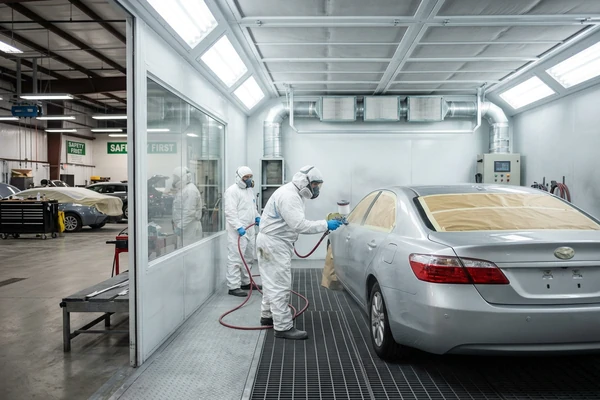
The application of automotive paint has been revolutionized by advanced technologies, moving far beyond traditional brush and roller methods to sophisticated spray systems that deliver unparalleled precision and efficiency. These modern application tools are designed to achieve uniform coverage, minimize overspray, and produce a factory-like finish, which is crucial for professional results.
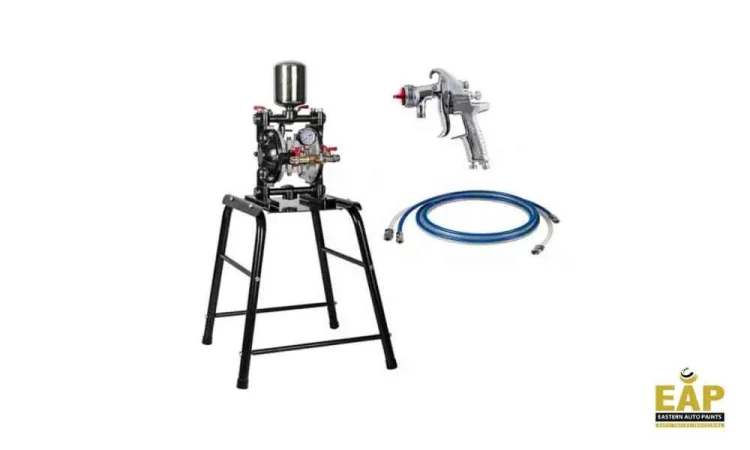
Among the most impactful innovations are advanced spray guns and airless spray units. Airless technology, for example, atomizes paint at high pressure without the use of air, resulting in a dense, even spray pattern that reduces material waste and speeds up application. This is particularly beneficial for larger surfaces or when applying thicker coatings. Brands like Atomex and Anest Iwata lead the way in providing high-performance equipment for various needs. Models such as the Atomex X75HD offer robust performance for heavy-duty applications, while the Anest Iwata ALS433 and Anest Iwata ALS333 are renowned for their precision and reliability, catering to a range of professional requirements. For those seeking versatile and efficient options, the 2Spray PS240G also stands out as a complete airless spray unit.
These advanced systems not only enhance the quality of the finish but also significantly improve productivity in a professional setting. They allow technicians to apply paint with greater control, achieving consistent film thickness and minimizing the risk of imperfections like runs or sags. The integration of such cutting-edge application tools is a testament to the ongoing commitment to excellence in the automotive refinishing industry, ensuring that every vehicle leaves the workshop with a finish that meets the highest standards.
The Role of Colour Theory and Precision Colour Matching
At the heart of achieving a perfect automotive finish lies a deep understanding of colour theory and the application of precision colour matching techniques. For designers and artists across various fields, colour matching is the process of accurately reproducing a specific colour, ensuring consistency and harmony across different elements or mediums. In the automotive world, this translates to seamlessly blending new paint with existing panels, making repairs virtually undetectable.
Colour theory provides the fundamental principles for understanding how colours interact, are perceived, and how they can be created or reproduced. Key elements include hue (the pure colour, like red or blue), saturation (the intensity or purity of the colour), and brightness (how light or dark a colour appears). Effective colour matching requires manipulating these elements to precisely replicate a target colour.
The science behind precision colour matching has advanced significantly, moving beyond subjective visual assessment to objective, data-driven methods. A cornerstone of this advancement is the spectrophotometer, a sophisticated instrument that plays a pivotal role in modern paint shops. A spectrophotometer works by shining a beam of light onto a colour sample and measuring the intensity of the light reflected at each wavelength. This data is then translated into a numerical representation of the colour, most commonly using the Lab* colour system. The Lab* system quantifies colour in a three-dimensional space: ‘L’ represents lightness (from black to white), ‘a’ represents the red-green axis, and ‘b’ represents the blue-yellow axis. This objective measurement allows for highly accurate colour identification and formulation.
One of the significant challenges in colour matching, particularly across different mediums or even within the same medium under varying conditions, is metamerism. This phenomenon occurs when two colours appear to match under one light source but not under another. For instance, a repair might look perfect under fluorescent workshop lights but appear mismatched in natural daylight. Spectrophotometers help minimize metamerism by providing precise colour data, allowing technicians to formulate paints that will match consistently across a range of lighting conditions. Understanding these principles and utilizing advanced tools are vital for achieving truly undetectable repairs and maintaining the aesthetic integrity of any vehicle. For a deeper dive into the technicalities and practical applications, our comprehensive guide on advanced automotive colour matching offers invaluable insights.
Digital Tools and Physical Standards in Colour Matching
In the dynamic world of automotive refinishing, the synergy between digital tools and physical standards is crucial for achieving impeccable colour matches. While digital platforms offer incredible convenience and a vast array of options, physical samples remain the ultimate benchmark for accuracy, especially when dealing with the nuanced complexities of automotive paint.
Digital tools and applications have revolutionized the initial stages of colour selection and inspiration. Platforms like Coolors and Paletton, for instance, are widely used by designers to generate harmonious colour palettes and explore combinations, with Paletton alone having served millions of visitors since its inception in 2002. These tools, alongside apps like My Best Colors, which uses AI-driven analysis to identify flattering hues for personal use, showcase the power of technology in understanding and manipulating colour. While these specific tools are geared towards graphic design or personal fashion, the underlying principle of digital colour analysis is increasingly being adapted for industrial applications. They allow for quick visual comparisons, exploration of complementary shades, and even accessibility checks against standards like WCAG (Web Content Accessibility Guidelines), ensuring that colour choices are not only aesthetically pleasing but also functional. Our dedicated page on colour matching provides further resources and information on this topic.
However, the transition from screen to physical surface introduces challenges. Electronic colours can appear differently on various monitors and under different lighting conditions, making a direct digital-to-physical match unreliable. This is where physical standards become indispensable. Colour chips, fan decks, and actual paint samples are critical for verifying a match. Systems like the Pantone Matching System (PMS) provide a universal language for colour, offering physical swatches that serve as a consistent reference point.
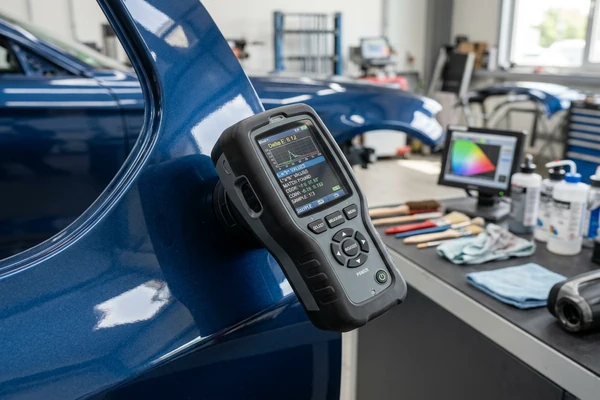
For automotive applications, obtaining Professional Tips for a Perfect Car Colour Match on Vehicles often involves comparing a scanned sample with a physical library of paint chips under controlled lighting. This process accounts for factors like paint age, fading, and the specific characteristics of metallic or pearlescent finishes, which are notoriously difficult to replicate digitally. Furthermore, understanding the nuances of Mixing & Matching Car Paint Colours requires hands-on experience and the ability to adjust formulations based on visual assessment against physical standards. The combination of digital efficiency for initial exploration and the unwavering accuracy of physical samples ensures that every automotive refinishing project achieves a flawless and enduring colour match.
Custom Aerosol and Powder Coat Colour Solutions
Beyond standard paint applications, the demand for specialized colour solutions has grown significantly, catering to unique projects and specific aesthetic requirements. Custom aerosols and powder coats represent two powerful options that offer versatility and durability for a wide range of automotive and industrial applications.
Custom aerosols provide an incredibly flexible solution for small-scale projects, touch-ups, or when a unique, precise colour is needed in a convenient spray format. Whether it’s matching an obscure vintage car colour, creating a custom accent, or simply needing a small quantity of a specific shade, custom aerosol cans deliver professional-grade results without the need for extensive spray equipment. This allows for quick, efficient, and cost-effective application, making them ideal for both professional workshops and skilled DIY enthusiasts. The ability to have virtually any colour mixed into an aerosol can opens up a world of creative possibilities, ensuring that even the most niche colour requirements can be met with precision. For more details on how these solutions can elevate your projects, explore our guide on Get Your Perfect Shade: Custom Aerosol Solutions for Every Project.
On the other hand, powder coating offers a robust and environmentally friendly alternative for parts requiring extreme durability and a high-quality finish. Unlike liquid paint, powder coating is applied as a dry powder and then cured under heat, creating a hard, resilient layer that is resistant to chipping, scratching, and fading. This makes it an excellent choice for wheels, engine components, chassis parts, and other elements exposed to harsh conditions. The range of available powdercoat colours is extensive, including various textures and finishes, allowing for highly customized and long-lasting results. Both custom aerosols and powder coating technologies underscore the industry’s commitment to providing tailored solutions that combine aesthetic appeal with superior performance, meeting the diverse needs of modern automotive and industrial projects.
Practical Solutions for Overcoming Refinishing Challenges
Refinishing vehicles presents a unique set of challenges that extend beyond mere colour application. Achieving a durable, high-quality finish requires navigating various hurdles, from environmental factors to the inherent properties of different paint materials. Understanding and effectively addressing these challenges is paramount for professional results.
Environmental conditions, such as temperature, humidity, and airflow, play a critical role in the paint application and curing process. Deviations from ideal conditions can lead to issues like solvent pop, blushing, or uneven drying, compromising the final finish. Proper ventilation and climate control within the spray booth are essential to mitigate these risks.
Another significant consideration is the choice between 1K (one-component) and 2K (two-component) paint systems. 1K paints are typically single-stage products that air dry or cure with heat, offering ease of use and faster drying times for certain applications. However, they generally provide less chemical resistance and durability compared to their 2K counterparts. 2K paints, on the other hand, consist of a base and a hardener that react chemically to create a much tougher, more durable, and chemically resistant finish. This makes them ideal for topcoats and clear coats where longevity and protection are critical. The trade-off is often a longer pot life and more stringent safety requirements due to the chemical activators.
Here’s a comparison of 1K and 2K paint characteristics:
Feature 1K Paint (One-Component) 2K Paint (Two-Component) Composition Single component, no hardener needed Base paint + separate hardener/activator Curing Process Air dries or cures with heat (solvent evaporation) Chemical reaction between base and hardener Durability Good for general use, less resistant to chemicals/abrasion Excellent, highly resistant to chemicals, abrasion, UV Hardness Softer, more flexible Harder, more rigid Application Easier, quicker, longer pot life More complex, requires mixing, shorter pot life Drying Time Generally faster for surface dry Longer to fully cure, but faster through-dry with hardener Lifespan Shorter, prone to fading/deterioration over time Longer, maintains gloss and protection for years Cost Generally lower Generally higher Use Cases Primers, some basecoats, quick repairs Topcoats, clear coats, industrial coatings, high-durability needs
Addressing these refinishing hurdles effectively requires a combination of high-quality products, advanced equipment, and skilled application techniques.
Managing Curing Times with Infrared Drying Technology
One of the most significant advancements in overcoming refinishing challenges, particularly concerning efficiency and quality, is the integration of infrared (IR) drying technology. Traditional air drying can be time-consuming and susceptible to environmental contaminants, potentially compromising the final finish. IR drying offers a powerful solution by significantly accelerating the curing process, leading to numerous benefits for professional workshops.
IR dryers emit electromagnetic radiation that directly heats the paint from within, rather than relying on convection to heat the surrounding air. This direct transfer of energy allows the paint to cure much faster and more uniformly, reducing drying times from hours to minutes. The accelerated curing process not only boosts workshop throughput but also minimizes the risk of dust and debris settling on the wet paint, resulting in a cleaner, smoother finish.
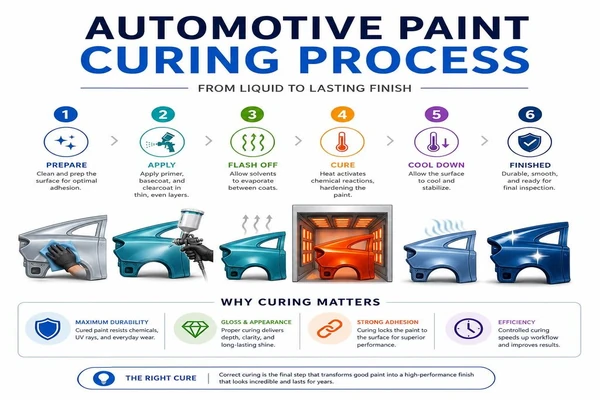
Modern IR drying units, such as the JV1 Velocity Infrared Drying Head 1, JV2 Velocity Infrared Drying Head 2, and JV3 Velocity Infrared Drying Head 3, are designed for precision and flexibility. These units can be positioned to target specific areas, ensuring optimal heat distribution and preventing overheating of surrounding panels. Their efficiency in managing curing times translates directly into increased productivity, lower energy consumption compared to convection ovens for smaller jobs, and a consistently superior finish, making them an indispensable tool in any modern automotive paint shop.
Achieving Specialty Finishes and Textured Coatings
The automotive and industrial sectors often demand more than just a standard smooth, glossy finish. Specialty finishes and textured coatings are increasingly popular, offering unique aesthetic qualities and enhanced functional properties. Achieving these distinctive looks requires specific products and application techniques.
Textured spray paints, for instance, are designed to create a tactile surface that can mimic various materials or provide a rugged, anti-slip quality. These coatings are excellent for interior components, truck beds, or industrial equipment where both appearance and durability are key. Our range of textured spray paint allows for the creation of unique surfaces that stand out while offering added protection against wear and tear.
Another popular specialty finish is hammertone paint, known for its distinctive dimpled or hammered appearance. This finish not only adds a decorative touch but also helps to conceal minor surface imperfections, making it a practical choice for various applications. Understanding the characteristics of these paints, including their suppliers and application methods, is essential for achieving the desired effect. Our guide on Understanding Hammertone Paint Colours, Suppliers and Finishes delves into the specifics of this unique coating, providing valuable insights for professionals and enthusiasts alike. These specialty coatings demonstrate the breadth of innovation in paint technology, enabling projects to achieve finishes that are both visually striking and highly functional.
Selecting the Right Clear Coats and Thinners
The final protective layer and the consistency of the paint mixture are critical elements in achieving a professional and durable automotive finish. Selecting the right clear coats and thinners is not merely a choice but a strategic decision that impacts the longevity, appearance, and application quality of the entire paint job.
Clear coats serve as the ultimate shield, protecting the underlying basecoat from UV radiation, scratches, chemical exposure, and environmental contaminants. They also provide the deep gloss and clarity that define a premium finish. The market offers a variety of clear coats, each with distinct properties. For instance, Concept 1K Unique Clear Acrylic provides a convenient single-component solution, often preferred for its ease of use and quick drying. In contrast, HS 2K Eurolak Clear is a two-component system, offering superior hardness, chemical resistance, and long-term durability, making it ideal for high-performance applications where maximum protection is required.
Thinners, also known as reducers, are equally important. They adjust the viscosity of the paint, allowing for optimal flow and atomization during spraying, which prevents issues like orange peel or dry spray. The type of thinner used must be compatible with the specific paint system (e.g., acrylic, enamel, 2K). For example, Unicolour 2K Thinner is formulated specifically for 2K paint systems, ensuring proper chemical reaction and curing. Similarly, Acrylic Thinner is designed for acrylic paints, while Multi Thinner 808 offers versatility across various paint types. For enamel-based coatings, the specialized Enamel Thinner 804 ensures the correct consistency and drying characteristics. The meticulous selection of clear coats and thinners is a testament to the precision required in modern automotive refinishing, ensuring that every layer contributes to a flawless and enduring result.
Specialty Applications: Aluminium Ute Trays and Industrial Coatings
The versatility of modern paint technology extends far beyond standard automotive bodywork, encompassing a wide array of specialty applications that demand specific protective and aesthetic qualities. Two notable areas are the coating of aluminium ute trays and the broad category of industrial coatings.
Aluminium ute trays, common on utility vehicles, require robust protection against abrasion, impacts, and harsh environmental conditions. Due to their frequent use in demanding environments, these surfaces need coatings that can withstand significant wear and tear while maintaining their appearance. Products like Protec Paraglaze 64 offer excellent durability and a high-quality finish, designed to protect aluminium surfaces effectively. The choice of coating for ute trays often balances extreme toughness with ease of application and maintenance, ensuring the tray remains functional and presentable despite heavy use.
Industrial coatings, on the other hand, encompass an even broader spectrum of applications, from heavy machinery and structural steel to marine equipment and infrastructure. These coatings are engineered to provide superior protection against corrosion, chemical exposure, extreme temperatures, and mechanical stress. Products like PPG Performance Enamel Topcoat (PET) and PPG Performance Polyurethane Topcoat (PPT) exemplify the advanced formulations available in this sector. PET offers excellent durability and colour retention for general industrial use, while PPT provides even higher levels of chemical and abrasion resistance, making it suitable for the most challenging environments. The selection of an industrial coating depends critically on the specific operational demands and environmental conditions, highlighting the need for expert advice to ensure the right product is chosen for optimal performance and longevity. These specialty applications underscore the importance of tailored paint solutions that meet the rigorous demands of diverse industrial and commercial uses.
Partnering with Eastern Auto Paints for Your Refinishing Projects
Achieving the perfect finish in automotive and industrial painting is a complex endeavour that demands not only high-quality products but also unparalleled expertise and support. At Eastern Auto Paints, we understand these intricacies, drawing on over 34 years of experience in the industry to provide comprehensive solutions for all your refinishing projects.
Our commitment to professional standards means we offer a curated selection of premium brands and cutting-edge technologies, ensuring that you have access to the best materials available on the market. From advanced paint systems and precision colour matching tools to state-of-the-art application equipment and specialty coatings, we provide everything needed to achieve exceptional results. Our team of seasoned professionals is dedicated to offering expert advice, guiding you through product selection, application techniques, and troubleshooting to ensure your projects are completed to the highest possible standard.
Whether you’re tackling a complex automotive restoration, an industrial coating application, or simply seeking a precise colour match for a minor repair, we are here to partner with you every step of the way. We pride ourselves on delivering not just products, but complete solutions that empower you to achieve professional, durable, and aesthetically pleasing finishes. For personalized guidance, product inquiries, or to discuss your specific project needs, we invite you to contact our team today. Discover how our expertise in colour matching and our extensive product range can elevate your next refinishing project to perfection.
Frequently Asked Questions About Colour Matching and Refinishing
What types of automotive paints do you offer?
We offer a comprehensive range of automotive paints to suit various needs, from professional body shops to skilled DIY enthusiasts. Our product selection includes high-quality automotive spray paints, convenient touch-up kits for minor repairs, a variety of primers for optimal adhesion and corrosion protection, and durable clear coats for a long-lasting, glossy finish. We focus on professional-grade products that deliver exceptional performance and durability.
How do I choose the right paint for my car?
Choosing the right paint involves several factors. Firstly, identifying your car’s original paint code is crucial for an accurate match. You’ll also need to consider the type of repair (e.g., small chip, panel repaint, full restoration) and your desired finish (e.g., gloss, matte, metallic, pearl). Our expert team can provide tailored guidance, helping you navigate our extensive product range to select the ideal paint system for your specific vehicle and project requirements.
Can you match my car’s factory colour?
Absolutely. Precision colour matching is one of our core specialties. We utilize advanced colour matching technology, including spectrophotometers, combined with the extensive experience of our team, to achieve highly accurate and seamless matches to your car’s factory paint. We account for factors like paint age, fading, and specific colour variants to ensure the new paint blends perfectly with the existing finish.
Do you offer products for DIY projects?
Yes, we cater to both professional workshops and DIY enthusiasts. While our products are professional-grade, many are suitable for skilled DIY applications. We believe in empowering our customers with quality materials and knowledge. Our team is always ready to offer expert advice and support, helping you select the right products and techniques to achieve excellent results on your DIY refinishing projects.