
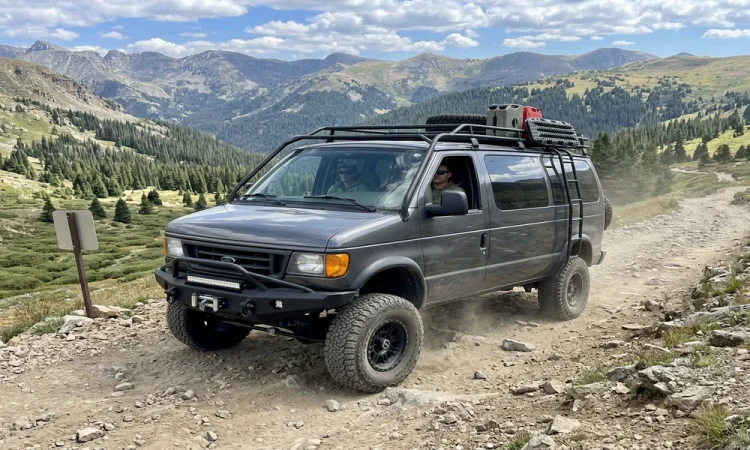
The Mechanics of 4×4 E-Series Van Equipment and Conversions
The call of the wild is stronger than ever. For adventurers and professionals alike, the idea of venturing beyond paved roads holds a unique appeal. Few vehicles embody this spirit quite like the Ford E-Series van. Since 1961, over 8.2 million E-Series units have been sold, making it a legendary workhorse. Its robust body-on-frame construction and durable Twin-I-Beam suspension have made it a favorite for decades.
While originally a two-wheel-drive platform, these vans offer an incredible foundation for a 4×4 transformation. We will explore how these reliable machines become ultimate off-grid vehicles. This guide covers everything you need to know about converting a Ford E-Series van to 4×4.
We will dive into the main conversion companies and their unique systems. We will also examine the best E-Series models and years for a conversion. You’ll learn about typical costs, components, and how a 4×4 upgrade impacts your van’s performance. Understanding the available 4×4 E-series van equipment is key to a successful build. We will also discuss warranty implications and compare the E-Series to other van options. Finally, we will share insights for buying a used 4×4 E-Series and important maintenance considerations. Join us as we unlock the full potential of this iconic van.
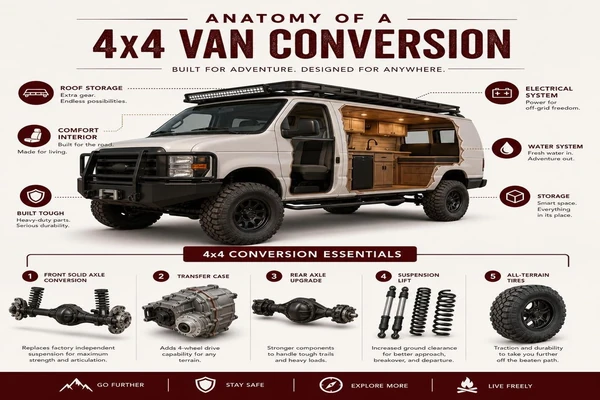
Transforming a two-wheel-drive Ford E-Series into a capable 4×4 machine involves a comprehensive overhaul of its drivetrain and suspension. This isn’t merely adding a transfer case; it’s a meticulously engineered process that integrates robust components to handle the rigors of off-road travel. The core of most high-quality conversions revolves around replacing the factory Twin-I-Beam independent front suspension with a solid front axle system, often sourced from heavy-duty Ford F-Series trucks.
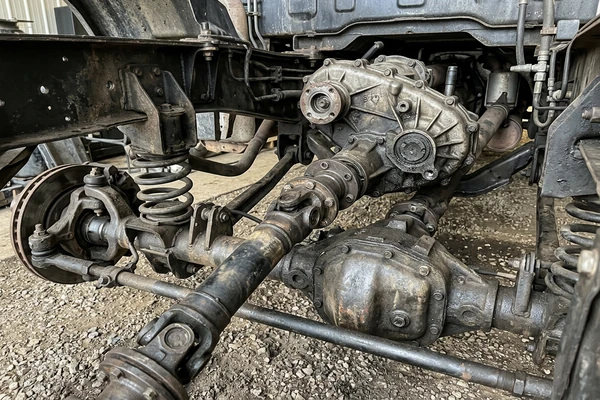
Leading conversion specialists such as Quigley Motor Company, Ujoint Offroad, and AJs 4×4 Vans each bring their own expertise to this process. While their methodologies differ slightly, the objective is the same: to enhance ground clearance, articulation, and overall off-road capability.
Quigley Motor Company is notable for its long-standing relationship with Ford, operating under Ford’s Special Vehicle Engineering (SVE) program. Their system typically utilizes OEM components from F-Series trucks for the front axle and transfer case, aiming for factory-like drivability and serviceability. Quigley’s conversions often increase ride height by approximately 4 inches while retaining the original coil-spring front suspension design for a smoother ride, though this can sometimes limit ultimate articulation compared to a solid axle.
Ujoint Offroad specializes in solid-axle 4×4 conversions. Their systems are renowned for their ruggedness and extreme off-road performance. A typical Ujoint conversion involves installing a high-pinion Dana 60 front axle and an NV271 transfer case, providing exceptional durability and articulation. These conversions often result in significant ride height increases-for instance, a 6-inch system can accommodate up to 35×12.50R18 tires, enhancing ground clearance dramatically. Ujoint’s approach often shifts the front axle forward by a couple of inches to improve tire clearance and approach angles.
AJs 4×4 Vans also focuses on professional engineering for 4WD conversions, emphasizing safety and handling. Their systems integrate solid front axles, suspension upgrades, and precise steering and braking adjustments to ensure the converted van maintains stable road manners while gaining formidable off-road prowess.
Regardless of the converter, the process involves several critical mechanical changes:
- Solid Front Axle Installation: This replaces the factory 2WD independent front suspension, providing superior strength, articulation, and ground clearance.
- Transfer Case Integration: A robust transfer case, like the NV271, is installed to distribute power to both front and rear axles.
- Suspension Upgrades: Heavy-duty springs (coil or leaf, depending on the system), shocks, and control arms are fitted to manage the increased weight and demands of off-road travel.
- Steering and Braking Adjustments: The steering geometry is recalibrated for the new suspension, and braking systems may be upgraded to handle larger tires and increased vehicle weight.
These modifications significantly impact the van’s dynamics. The increased ride height translates directly to improved ground clearance, allowing the van to navigate obstacles more effectively. Enhanced suspension articulation keeps tires in contact with uneven terrain, maximizing traction. However, raising the center of gravity requires drivers to adjust their handling expectations, especially during cornering or on steep inclines.
Let’s look at a comparison of common suspension approaches:
Feature Coil-Spring Conversion (e.g., some Quigley systems) Leaf-Spring Solid Axle Conversion (e.g., Ujoint, AJs) Front Suspension Type Retains coil springs for front suspension Replaces with leaf springs Ride Comfort Generally smoother on-road Can be stiffer on-road, better off-road feel Articulation Good, but often less than solid axle leaf spring Excellent, maximizes wheel travel Durability Very good, often uses OEM F-Series components Extremely robust, designed for heavy abuse Maintenance Simpler due to fewer moving parts than IFS Straightforward, common truck components Lift Height Typically around 4 inches Often 4-6 inches or more Tire Clearance Good, but may require fender trimming for larger tires Excellent, designed for larger tires (e.g., 35-inch) Complexity Moderate High, involves significant fabrication Choosing the Best E-Series Models and Powertrains
When embarking on a 4×4 E-Series conversion, selecting the right base van is paramount. The fourth-generation E-Series (1992-2014) stands out as having the most extensive aftermarket support for 4×4 conversions. These models offer a robust platform and a wide range of available parts.
For serious off-road or heavy-duty applications, we generally recommend starting with an E-250 or E-350 model. These vans feature stronger chassis and larger axles compared to the lighter E-150, which has smaller rear frame sections and narrower leaf springs. If you plan to add significant weight with camper build-outs or heavy gear, the E-250/E-350 provides a more suitable foundation.
Even though production of passenger and cargo E-Series vans ceased after the 2014 model year, Ford continues to produce E-350 and E-450 cutaway chassis. These newer cutaways, often seen in commercial applications, are also viable candidates for 4×4 conversions, with companies like Quigley adapting their systems to these current models.
Regarding powertrains, several options have been available over the years:
- 5.4L V8: This is the most commonly found engine in fourth-generation E-Series vans. It’s a reliable workhorse, offering adequate power for most applications.
- 6.8L V10: For those seeking more power, particularly in heavier builds or for towing, the V10 engine is a strong contender. When paired with the durable 5R110 automatic transmission (found in models from 2005 and newer), it creates a highly capable powertrain combination.
- 7.3L Godzilla V8: Newer E-Series cutaways (2021 model year and later) are equipped with Ford’s powerful 7.3L Godzilla V8, producing 430 horsepower and 475 lb-ft of torque. This engine provides exceptional performance for the heaviest applications.
- Diesel Engines: While popular in F-Series trucks, diesel engines in E-Series vans (like the 6.0L Power Stroke) have historically proven less reliable and more costly to maintain than their gasoline counterparts. Additionally, the confined engine bay of the E-Series can lead to diesel cooling limitations, especially when combined with the added stress of 4×4 components and heavy loads. For these reasons, many conversion specialists recommend sticking with gasoline engines for E-Series 4×4 builds.
Other considerations include frame thickness differences across models and years, and ensuring sufficient wheel well clearance for larger tires post-conversion. After 2008, all E-Series vans received a semi-float Dana 60 rear axle, which is a robust component for most uses.
Essential 4×4 E-Series Van Equipment for Off-Road Performance
Once the core 4×4 conversion is complete, outfitting your E-Series van with the right equipment is crucial for maximizing its off-road performance, utility, and comfort. This extends beyond just the drivetrain to include everything that makes your van a true off-grid adventure machine or a highly capable work vehicle.
For enhanced capability, we consider several categories of 4×4 E-series van equipment:
- Tires and Wheels: Upgrading to larger, aggressive all-terrain or mud-terrain tires is fundamental. Most 6-inch lift conversions can accommodate 35-inch tires, often specified as 35×12.50R18. It’s vital to select tires with the correct load range (E or F) to safely support the van’s weight, especially after adding heavy build-outs and gear. Beadlock-capable wheels can also be considered for extreme off-roading to prevent tire debeading at low pressures.
- Exterior Protection and Recovery: Off-road armor, such as heavy-duty front and rear bumpers with integrated winches and recovery points, are essential. Rock sliders protect the rocker panels, and skid plates shield vital underbody components.
- Storage and Organization: For both overlanding and work applications, efficient interior organization is key. Heavy-duty shelving and modular storage packages help secure gear, tools, and supplies, preventing them from shifting during dynamic driving. Options range from simple shelving units to specialized packages for HVAC, plumbing, or telecom professionals. These systems are often custom-designed to fit the E-Series interior perfectly.
- High-Top or Pop-Top Conversions: To increase interior standing room and storage, many E-Series vans undergo roof modifications. High-top conversions provide fixed, permanent extra space, ideal for full-time living or extensive gear storage. Pop-top installations offer the flexibility of a lower profile for travel and parking, expanding vertically when camped.
- Power Systems: Off-grid adventures and mobile workstations demand reliable power. Installing dual alternators or a high-output alternator ensures sufficient charging for auxiliary battery banks. A robust auxiliary battery system, often lithium-ion, coupled with a high-quality inverter (such as a Samlex brand power inverter), allows for running appliances, charging electronics, and powering tools far from grid connections.
- Lighting: Upgraded exterior lighting, including LED light bars and floodlights, improves visibility during night driving and campsite setup.
When selecting and installing these components, it’s always recommended to consult with experienced outfitters who understand the unique demands of a 4×4 E-Series van.
Real-World Performance, Costs, and Ownership Realities
Owning a 4×4 E-Series van is a unique experience, blending rugged capability with the practicality of a full-size van. However, it comes with specific performance characteristics, cost considerations, and ownership realities that prospective buyers should understand.
Performance Impact:
- Ride Quality: While the 4×4 conversion dramatically improves off-road prowess, it inevitably alters on-road ride quality. Solid axle conversions, especially with heavier-duty leaf springs, can feel stiffer than the factory independent front suspension. Coil-spring conversions tend to retain a slightly softer ride.
- Center of Gravity and Handling: Increasing the ride height raises the van’s center of gravity. This means drivers must adjust their handling expectations, particularly when cornering, on uneven terrain, or in strong crosswinds. The van will feel less nimble than a stock 2WD version.
- Fuel Economy: The combination of increased weight, larger and more aggressive tires, and aerodynamic changes from the lift all contribute to a noticeable decrease in fuel economy compared to a stock E-Series.
- Vehicle Weight Distribution: A proper conversion takes into account weight distribution, but adding heavy interior build-outs, gear, and accessories can further impact handling and tire wear. It’s advisable to get the van weighed at a truck stop to ensure you’re within safe gross vehicle weight ratings (GVWR) and to select appropriate load-range tires.
Costs Involved: A 4×4 E-Series conversion is a significant investment. The conversion cost breakdown typically includes:
- Base Van: Varies widely based on year, mileage, and condition.
- 4×4 Conversion Kit/Labor: This is the largest expense, ranging from $10,000 to $25,000+ depending on the system (kit vs. full build) and labor. This includes the front axle, transfer case, suspension, steering, and driveline modifications.
- Wheels and Tires: Expect to spend $2,000-$4,000+ for a quality set of larger tires and wheels.
- Additional Upgrades: Bumpers, winches, roof racks, high-tops, interior build-outs, and auxiliary power systems can add tens of thousands more.
It’s not uncommon for a fully built 4×4 E-Series camper van to represent an investment comparable to, or even exceeding, a new factory 4×4 vehicle.
Ownership Realities:
- Insurance Valuations: A challenge for custom 4×4 E-Series owners is insurance. Standard valuation guides like Kelley Blue Book do not account for the significant investment in a 4×4 conversion and custom build. This can make it difficult to get adequate coverage that reflects the true value of your vehicle. We recommend working with specialized insurance providers who understand custom vehicle valuations.
- Financing Challenges: Similarly, financing a used E-Series with a custom 4×4 conversion can be difficult through traditional lenders, as the vehicle’s market value may not align with its appraised value.
- Used Buyer Inspection Tips: When purchasing a used 4×4 E-Series, thorough inspection is critical. Look for:
- Rust: E-Series vans, especially older models, are prone to rust, particularly on the frame, body panels, and around windows. Get detailed undercarriage photos and inspect thoroughly.
- Conversion Quality: Inquire about the conversion company and the components used. Look for clean welds, proper alignment, and professional wiring.
- Maintenance Records: Request comprehensive maintenance records for both the base van and the 4×4 components.
- Test Drive: Pay close attention to steering feel, vibrations, and any unusual noises.
- Maintenance Considerations: While robust, a 4×4 E-Series requires regular maintenance, especially after off-road use. This includes checking fluid levels (differentials, transfer case), inspecting suspension components for wear, and ensuring proper tire pressure and rotation. Rust prevention is an ongoing effort, particularly in humid or salty environments.
Warranty Implications for 4×4 E-Series Van Equipment
Understanding the warranty implications is crucial when considering a 4×4 conversion for your Ford E-Series van. This area can be complex, as modifications typically affect a manufacturer’s standard warranty. However, certain conversion specialists offer unique protections.
Quigley Motor Company stands out as the only manufacturer authorized under Ford’s Special Vehicle Engineering (SVE) program to install 4×4 systems on E-Series vans (and Transit vans) with fewer than 60,000 miles. This authorization is a significant advantage, as it means that for Quigley conversions, the Ford factory warranty on unaltered components remains intact. This is a key differentiator from many aftermarket conversions.
Here’s a breakdown of Quigley’s warranty structure, which serves as a benchmark for authorized conversions:
- New E-Series (0 – 5,000 miles): Vehicles converted within this mileage range typically receive a 60 Month / 60,000 Mile Warranty on the Quigley 4×4 system. The original Ford warranty continues to cover all other factory components not modified by Quigley.
- Used E-Series (5,001 – 30,000 miles): Conversions in this range usually come with a 24 Month / 24,000 Mile Warranty.
- Used E-Series (30,001 – 60,000 miles & export): These conversions receive a 12 Month Warranty.
For any warranty work, it’s essential to:
- Verify Extended Warranties: If purchasing a vehicle with an existing extended warranty, confirm in writing that it remains valid for the unaltered components of the 4×4 converted vehicle.
- Authorized Conversion Guidelines: Adhere strictly to the guidelines provided by the conversion company.
- Component Coverage: Understand what specific components are covered by the conversion warranty versus the remaining Ford factory warranty.
- Maintenance Schedules: Follow the recommended maintenance schedule for both the base van and the 4×4 components to keep warranties valid.
- OEM Serviceability: Quigley’s use of OEM Ford F-Series components in their conversions is a deliberate choice to ensure that many parts can be serviced at authorized Ford dealers, simplifying maintenance and repairs. However, for any warranty repairs related to the 4×4 system, you typically must obtain authorization from the conversion company (e.g., Quigley) before proceeding.
For conversions not performed by an SVE-authorized upfitter, the warranty landscape changes considerably. Most aftermarket 4×4 conversions will void the original Ford factory warranty on any components affected by the modification. In such cases, the conversion company typically provides its own warranty for the installed 4×4 system, while the owner assumes responsibility for any factory components that fail due to the modification. Always clarify warranty terms directly with the conversion specialist before committing to a build.
Comparing the 4×4 E-Series to Modern Van Platforms
The Ford E-Series 4×4 occupies a unique niche in the adventure vehicle market, distinct from modern factory 4×4 or all-wheel-drive (AWD) options like the Ford Transit. Understanding these differences is key to choosing the right platform for your needs.
Ford E-Series 4×4 Advantages:
- Body-on-Frame Construction: The E-Series’ traditional body-on-frame design provides exceptional durability and a robust platform for heavy loads and off-road abuse. This construction is inherently stronger and more adaptable to severe modifications than a unibody structure.
- True 4×4 Capability: Aftermarket conversions typically install a solid front axle and a dedicated transfer case with a low range, offering superior off-road performance, articulation, and durability compared to most factory AWD systems.
- Payload Capacities: E-Series vans, particularly the E-350 and E-450 cutaways, boast impressive payload capacities, making them ideal for heavy camper build-outs or extensive work equipment. For example, E-450 DRW cutaways can support GVWR payload packages up to 14,200 pounds.
- Aftermarket Support Longevity: With over 60 years of production history and a vast installed base, the E-Series benefits from an enormous aftermarket for parts and modifications, especially for the popular fourth generation (1992-2014). This ensures long-term maintenance accessibility.
- Affordability (Base Vehicle): Used E-Series vans can often be acquired for a lower initial cost than newer vans, providing a more budget-friendly entry point before conversion costs.
Ford Transit and Other Modern Van Platforms (e.g., Mercedes Sprinter, Ram ProMaster) Comparisons:
- Unibody Construction: Modern vans like the Ford Transit feature unibody construction, which offers better on-road handling, fuel economy, and crash safety. However, it’s generally less robust for heavy off-road modifications and extreme loads.
- Factory AWD Limitations: While the Ford Transit offers a factory AWD option, it’s typically a less aggressive system than a true 4×4 solid axle conversion. It lacks a low-range transfer case and the robust suspension components designed for sustained off-road punishment. It’s excellent for improved traction on slippery roads or light trails but not for serious rock crawling or deep mud.
- Interior Volume and Ergonomics: Modern vans often feature more vertical interior space and contemporary ergonomics, which can be appealing for camper conversions.
- Fuel Economy: Generally, modern vans offer better fuel economy due to lighter construction, more aerodynamic designs, and advanced powertrains.
- Technology and Safety Features: Newer vans come equipped with advanced driver-assistance systems, infotainment, and safety features not found in older E-Series models.
- Maintenance Accessibility: While parts for modern vans are readily available, the specialized nature of some components (e.g., complex electronic systems) might require dealership service.
In summary, if you prioritize extreme off-road durability, heavy payload capacity, and a proven, robust body-on-frame platform for a highly customized build, the 4×4 E-Series remains an unparalleled choice. For those seeking better on-road manners, fuel efficiency, modern amenities, and lighter off-pavement capability, a factory AWD modern van might be more suitable. The E-Series 4×4 is a purpose-built beast, designed to take you and your gear far off the beaten path, a capability that few other vans can truly match.